
 EN
EN
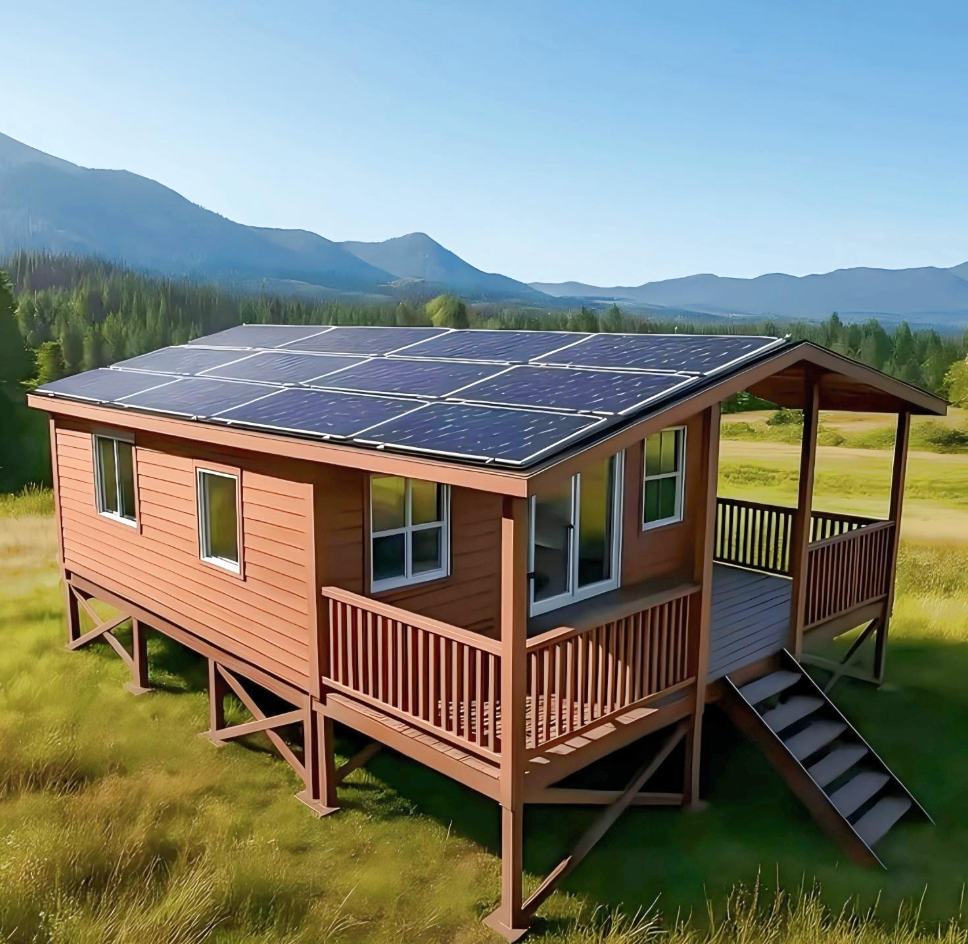
Baseline Dimensions and Real-World Expansion Capacity of an Expandable House
Standard Core Footprint vs. Fully Expanded Layouts Across Leading Models
Expandable houses begin as transport-optimized units aligned with standard shipping container lengths—20ft (6m), 30ft (9m), or 40ft (12m)—with a typical core width of 2.2–2.4m. Through sliding or folding mechanisms, leading models achieve 2.5–3.5m width expansion on-site. For example:
- A 30ft unit expands from 2.2m to 6.16m wide, delivering up to 55.4m² of usable interior space
- A 40ft model reaches 74.34m² after full deployment
This rapid transformation supports flexible configurations—from compact studios to functional 2-bedroom layouts—within hours. The expansion ratio reflects a deliberate design trade-off: smaller units prioritize mobility and ease of permitting, while larger models emphasize long-term livability and space efficiency for permanent occupancy.
Measuring True Gain: Net Usable Area After Accounting for Structural Elements
Advertised expansion area overstates real-world usability. Structural necessities—including wall assemblies (5–7cm thick), telescoping rails, insulation layers, and support beams—reduce net floor area by 5–10%. In practice:
- A 40ft unit marketed at 74.34m² typically delivers 67–70m² of verified usable space
- Telescoping rails occupy ~0.3m along sliding walls
- Climate-adaptive insulation reduces interior dimensions by 3–5%
- Vertical obstructions (e.g., load-bearing beams) limit headroom and layout flexibility
Design excellence is measured not just in gross expansion, but in minimizing these losses. Buyers should request third-party—verified net area calculations—not theoretical maximums—to accurately assess spatial value.
Key Constraints That Define Actual Living Space in an Expandable House
Foundation Requirements and Their Effect on Floor-Plan Efficiency
The kind of foundation used has a real impact on how much actual living space we get. Permanent foundations need thicker support structures, those utility chase walls running through the floors, plus all sorts of reinforced anchor points which eat away about 10 to 15 percent of what could otherwise be usable square footage. When building on flood risk areas, elevated foundations come into play but they tend to cut down on ceiling heights inside. And then there's the frost protected shallow footings option that pretty much rules out any possibility for basements or below ground expansions. Looking at data from last year's Prefab Construction Benchmark Report shows something interesting too. These foundation limitations actually reduce the total usable space by as much as 18% compared to regular site built homes. This has pushed designers to get creative with things like vertical storage solutions, furniture that serves multiple purposes, and shrinking down those service core spaces without sacrificing functionality.
Expansion Mechanism Trade-offs: Folding, Sliding, and Stacking Impacts on Usable Square Footage
Mechanical systems define both capability and compromise. Each expansion method sacrifices interior space differently:
- Folding units lose 10–15% to hinge assemblies and folded-wall stacking—but deploy in under 90 minutes
- Sliding configurations retain full ceiling height but require 15–20% clearance along movement paths, effectively narrowing usable width
- Stacking modules enable vertical growth yet demand structural reinforcements occupying 8–12% of floor area
Trackless hydraulic systems offer the highest spatial efficiency—minimizing mechanical intrusion—but remain niche, representing just 15% of current market offerings per the 2024 Modular Housing Market Analysis.
| Expansion Type | Space Loss % | Key Advantages | Best For |
|---|---|---|---|
| Folding | 10–15% | Fastest deployment | Temporary installations |
| Sliding | 15–20% | Full ceiling height retention | Permanent residences |
| Stacking | 8–12% | Vertical living expansion | Urban infill lots |
Spatial Flexibility and Adaptive Usability Across Expansion Stages
Room Zoning Evolution: From Studio to Multi-Bedroom Configurations
The defining strength of an expandable house is its ability to evolve with occupants—not just for them. At minimum configuration, open-plan studio layouts (400–600 sq ft / 37–56m²) deliver essential living, sleeping, and cooking functions within a tightly integrated footprint. As expansion activates, spatial intelligence takes over:
- Movable partitions create temporary guest zones
- Telescoping sections isolate home offices or nurseries
- Full deployment enables true room separation—distinct bedrooms, bathrooms, and utility areas
According to the 2024 Flexible Housing Report, modular designs can actually free up around 65% more living space during different growth phases, turning what starts as a basic core unit into something with distinct zones over time. The real beauty lies in how adaptable these homes are throughout their lifespan. Homeowners can adjust the actual floor space along with monthly bills exactly when they need it. Think about it this way: young couples often begin with minimal space requirements. As kids come along, parents simply expand into new areas designed specifically for children's needs. And for those big family situations where multiple generations live together, there's no need for major renovations since additional private quarters can be incorporated seamlessly. Traditional houses tend to have lots of empty rooms sitting unused most of the time, whereas these flexible options provide space only when needed. This approach not only saves money but also helps reduce environmental impact in the long run.
FAQ
What are the baseline dimensions of an expandable house?
Expandable houses align with standard shipping container lengths such as 20ft, 30ft, or 40ft, featuring a core width of 2.2–2.4m which can expand on-site to widths of 2.5–3.5m.
What factors reduce the net usable area in expandable houses?
Structural elements such as wall assemblies, telescoping rails, insulation layers, and support beams can reduce the net floor area by 5–10%.
How do foundation requirements affect an expandable house?
Permanent foundations can reduce usable square footage by 10–15% due to thicker support structures and reinforced anchor points. Elevated foundations can further impact ceiling heights.
What are the different expansion mechanisms and their space loss percentages?
Folding units lose 10–15% of space, sliding configurations require about 15–20% clearance, while stacking modules take up 8–12% of floor area.