 EN
EN
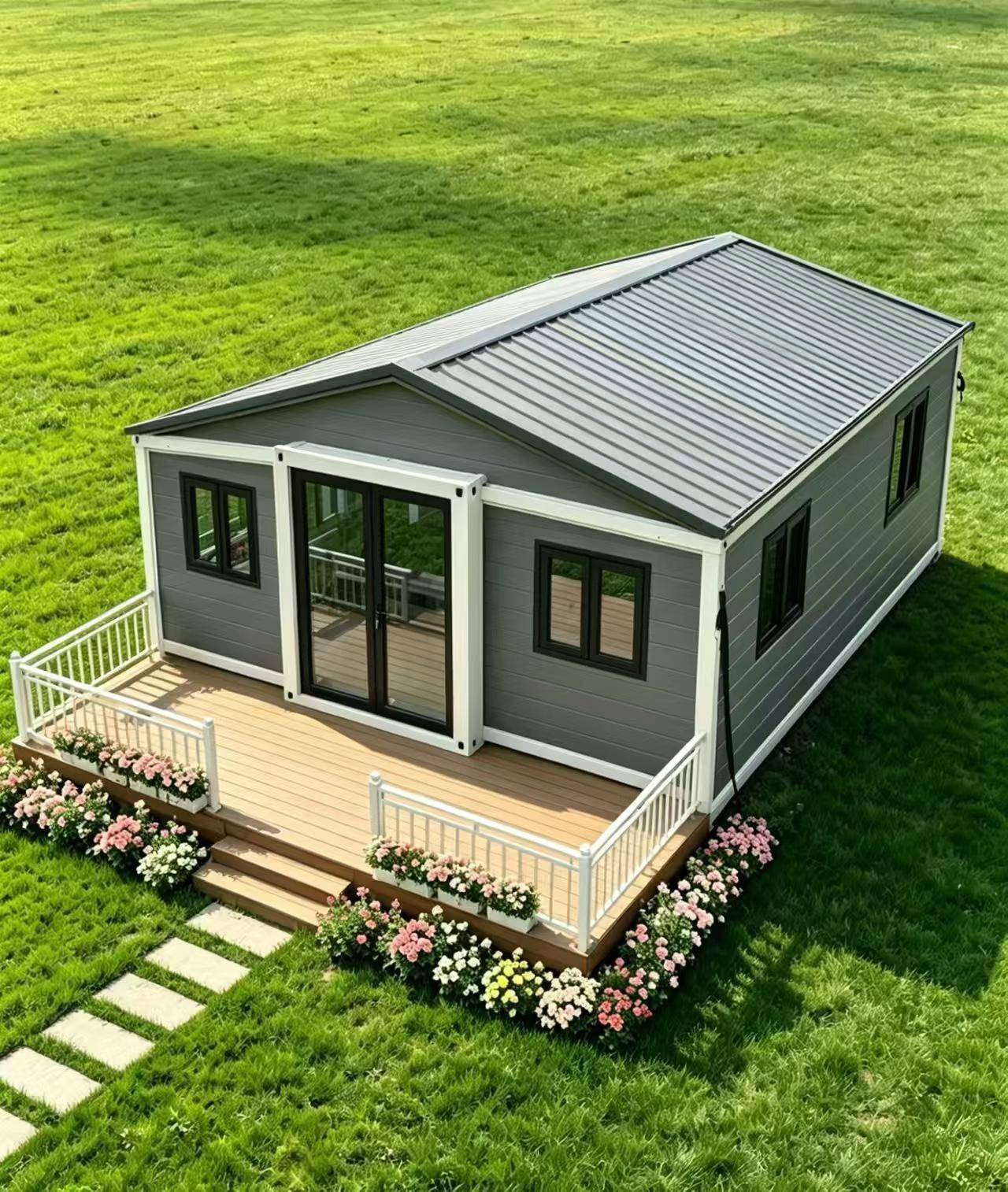
Why Expandable Container Houses Accelerate Remote Workspace Deployment
Hydraulic vs. Modular Expansion Systems: Speed, Reliability, and Site Flexibility
Expandable container houses deploy rapidly through two primary expansion mechanisms: hydraulic systems and modular assemblies. Hydraulic systems enable single-unit expansion in under 4 hours—ideal for time-sensitive deployments on level terrain. Modular designs require 6–8 hours for assembly but offer superior reconfiguration flexibility, allowing workspace adaptation to uneven sites or evolving operational needs. Both methods eliminate traditional construction delays, with hydraulic excelling in speed and modular in site versatility. Crucially, these systems maintain structural integrity during transport and redeployment, ensuring reliable performance across multiple project cycles without compromising insulation or weatherproofing—a critical advantage for remote teams facing unpredictable environments.
72-Hour Setup Reality Check: How Expandable Container Houses Cut Timeline by 90% vs. Traditional Builds
Traditional construction for remote workspaces typically consumes 3–6 months for permits, foundation work, and assembly. In stark contrast, expandable container houses achieve operational readiness in 72 hours through factory-integrated MEP (Mechanical, Electrical, Plumbing) systems and preconfigured interiors. This 90% timeline reduction stems from three key factors:
- Eliminated site construction: Factory-built units bypass weather delays and skilled labor shortages
- Streamlined logistics: Single-container transport reduces shipping costs by 75% versus conventional materials
- Minimal on-site labor: Four workers can deploy units using standard equipment, avoiding specialized contractors
The accelerated process enables businesses to establish functional workspaces within days rather than months—transforming remote project economics and responsiveness.
Mobility Meets Functionality: Engineering Expandable Container Houses for Itinerant Teams
Road-Legal Transport, Crane-Lift Readiness, and On-Site Reconfiguration in Under a Day
Engineered for mobile operations, expandable container houses comply with standard road transport regulations (typically 8.5 ft width, 9.5 ft height) without special permits. Reinforced corner castings and ISO-standard dimensions enable seamless trailer loading, while weatherproof seals protect interiors during transit. Integrated lifting points allow crane placement on uneven terrain in under 30 minutes, eliminating costly site preparation. Hydraulic expansion systems deploy the structure to its full footprint in under four hours—fully mechanized to reduce manual labor and injury risks. Pre-installed MEP systems feature plug-and-play utility connections, cutting total setup time—including HVAC activation—to eight hours. Modular interior panels reconfigure spaces for offices, labs, or meeting rooms in under two hours, enabling functional adaptation with minimal downtime. This end-to-end efficiency reduces deployment costs by 60% compared to traditional builds, letting teams occupy operational workspaces within one day of arrival.
Prefabricated Precision: Balancing Standardization and Customization in Expandable Container Houses
Factory-Integrated MEP, Plug-and-Play IT Infrastructure, and Acoustic/Climate Optimization for Hybrid Work
Factory-integrated Mechanical, Electrical, and Plumbing (MEP) systems eliminate on-site coordination delays by embedding critical infrastructure during manufacturing. This controlled environment ensures precision wiring, plumbing, and HVAC routing—reducing installation errors by 63% versus field-built alternatives. Plug-and-play IT frameworks feature pre-configured data conduits and power distribution, enabling immediate connectivity for distributed teams. Standardized mounting points accommodate client-specific hardware like servers or video conferencing gear without structural modifications.
Acoustic optimization employs layered insulation and vibration-dampening panels to maintain 35 dB sound levels during video calls, while climate systems use zoned temperature control for energy efficiency. Hybrid work demands require balancing standardized modules with tailored configurations: partition walls reposition in hours, and solar-ready roofs adapt to off-grid needs. This approach maintains rapid deployment while supporting specialized workflows—all within the structural integrity of an expandable container house.
Real-World Validation: Case Studies of Expandable Container Houses in Operational Remote Workspaces
Northern Maine Off-Grid Tech Hub: Energy Independence, 4-Day Deployment, and Year-Round Performance
A technology research hub in Northern Maine demonstrates how expandable container houses deliver operational resilience in extreme environments. The facility achieved full energy independence through integrated solar arrays and battery systems, eliminating grid dependency despite temperatures dropping to –22°F (–30°C). Critically, the entire complex deployed in just 4 days using hydraulic expansion systems—a 90% reduction compared to conventional construction timelines. Post-occupancy data revealed consistent thermal performance with heating costs 45% lower than traditional builds, validating engineered solutions for harsh climates.
Pacific Northwest Co-Working Micro-Campus: Scalable Units Supporting Distributed Team Growth
When a Pacific Northwest startup needed flexible workspace for distributed teams, modular expandable container houses provided immediate scalability. The micro-campus configuration grew from 3 to 12 units within 8 months, accommodating 87 personnel without site disruption. Key features driving adoption included plug-and-play IT infrastructure enabling 24-hour connectivity, acoustic-segmented workspaces reducing ambient noise by 32 dB, and crane-ready foundations allowing unit reconfiguration in under 6 hours. This approach reduced overhead costs by $18k monthly while supporting a 140% team expansion—proving the viability of adaptive workspaces for growing organizations.
FAQ Section
What is the main advantage of using expandable container houses for remote workspaces?
The primary advantages include rapid deployment, cost savings, and flexibility. Expandable container houses can be operational in just 72 hours, drastically reducing timelines and allowing businesses to respond quickly to changing needs.
How do expandable container houses achieve such fast deployment times?
These houses are factory-built with integrated systems, reducing the need for on-site construction and eliminating delays caused by weather or labor shortages. This results in a 90% reduction in setup time compared to traditional builds.
Are expandable container houses suitable for all types of terrain?
Yes, with both hydraulic and modular systems, these houses can adapt to various terrains, including uneven sites, making them versatile solutions for remote or challenging locations.
Can expandable container houses be customized?
Yes, they offer a balance between standardization and customization. While they come with factory-integrated systems, they can be configured to meet specific needs, such as partitioning walls or solar-ready roofs.
How do these houses handle extreme weather conditions?
Expandable container houses are engineered to maintain structural integrity and performance in extreme conditions, with features like layered insulation and weatherproof seals ensuring resilience.
Table of Contents
- Why Expandable Container Houses Accelerate Remote Workspace Deployment
- Mobility Meets Functionality: Engineering Expandable Container Houses for Itinerant Teams
- Prefabricated Precision: Balancing Standardization and Customization in Expandable Container Houses
- Real-World Validation: Case Studies of Expandable Container Houses in Operational Remote Workspaces
-
FAQ Section
- What is the main advantage of using expandable container houses for remote workspaces?
- How do expandable container houses achieve such fast deployment times?
- Are expandable container houses suitable for all types of terrain?
- Can expandable container houses be customized?
- How do these houses handle extreme weather conditions?