
 EN
EN
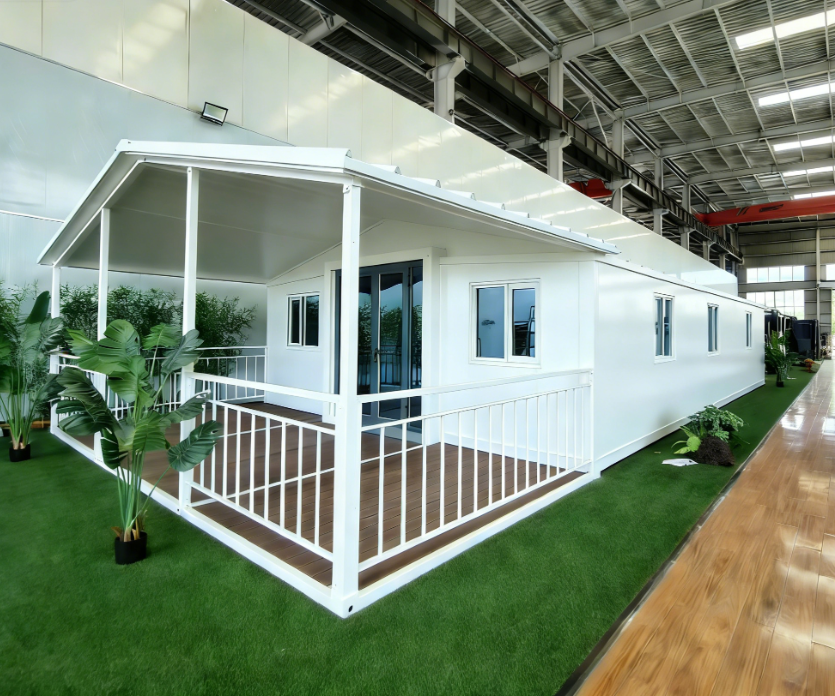
Why Expandable House Designs Are Gaining Momentum in Modern Housing
Urbanization and shifting family needs are driving unprecedented demand for scalable living spaces. Since 2020, global interest in expandable house solutions has surged by approximately 40%, as homeowners seek adaptable alternatives to traditional construction. Three primary factors fuel this momentum:
- Space Efficiency: With 67% of urban families requiring vertical or horizontal expansion options within existing lots, designs that grow upward (like loft conversions) or outward (through modular additions) solve space constraints without property acquisition.
- Economic Pressure: Construction costs rose 14% in 2023 alone, making prefabricated expandable units—which complete 30% faster than conventional builds—a cost-effective solution. Modular methods also reduce material waste by 30% Construction Waste Study 2023.
- Lifestyle Shifts: Remote work necessitates dedicated home offices in 42% of households, while multigenerational living arrangements increased by 22% since 2018. Expandable designs accommodate these changes through convertible rooms and pre-planned utility access points.
Permits for such flexible dwellings skyrocketed 320% from 2018–2023, particularly in coastal regions where they outpace traditional homes 9:1. Millennials further propel this trend, with 33% prioritizing "lifetime homes" that evolve with career and family needs.
Core Expandable House Strategies: Modular, Vertical, and Adaptive Approaches
Forward-thinking homeowners increasingly adopt three core strategies to scale living spaces efficiently: modular additions, vertical expansion, and adaptive interiors. These approaches balance spatial flexibility with cost control—a priority for 62% of upgradable housing seekers Modular Building Institute 2024.
Modular Additions: Prefab Extensions That Preserve Structural Integrity and Timeline Predictability
Factory-built modules attach to existing structures via pre-engineered connectors, minimizing onsite disruption. Standardized components ensure consistent quality while reducing construction timelines by 30–50% compared to conventional additions. These precision-engineered units maintain load-bearing safety through integrated footing systems, preventing structural stress during integration.
Vertical Expansion: Lofts, Attics, and Second-Story Add-Ons to Increase Square Footage Without Lot Growth
Expanding upward maximizes unused air rights, typically adding 60–80% more floor area without consuming additional land. Engineered steel frames or reinforced timber structures support new levels, while prefabricated staircases simplify access. This approach circumvents land scarcity issues—particularly valuable in urban zones where lot expansion is impossible.
Adaptive Interiors: Multifunctional Spaces and Expandable Furniture That Dynamically Optimize Usable Area
Transformable elements like sliding partitions, foldable worksurfaces, and convertible furnishings enable single rooms to serve multiple purposes:
- Retractable beds create daytime office spaces
- Movable kitchen islands expand dining capacity
- Collapsible storage walls reveal hidden utility areas
Such designs increase functional space efficiency by 40% without physical expansion Space Optimization Council 2023.
Designing an Expandable House for Long-Term Flexibility and Future-Proofing
Creating an expandable house requires strategic foresight to accommodate evolving living needs without costly reconstruction. By embedding scalability into initial designs, homeowners avoid relocation expenses and structural compromises. Key considerations include anticipating family growth, aging-in-place requirements, and technological advancements—all while maintaining budget efficiency. Proactive planning reduces renovation costs by up to 40% compared to retrofitting traditional homes.
Foundational Planning: Load-Bearing Walls, Utility Routing, and Zoning for Seamless Later Expansion
Three pillars ensure hassle-free future modifications:
- Load-Bearing Walls: Position non-critical walls to allow future openings; reinforce potential expansion zones during initial construction
- Utility Routing: Install oversized conduit chases for electrical/plumbing and central HVAC junctions to simplify later extensions
-
Zoning Compliance: Verify setback allowances, height restrictions, and floor-area ratios early to prevent legal obstacles
This triad enables modular additions or vertical growth while preserving structural integrity—critical when expanding living space by 30–50%.
FAQ
What is an expandable house?
An expandable house is a living space designed to grow vertically or horizontally, allowing for scalability without acquiring additional land. This design caters to evolving personal and family needs, such as accommodating more persons or creating a home office.
Why are expandable houses becoming popular?
Expandable houses are gaining popularity because they are space-efficient, economically favorable, and adaptable to lifestyle shifts, such as remote work requirements and multigenerational living.
How do modular additions work?
Modular additions attach to existing structures using pre-engineered connectors, maintaining the building's structural integrity. They provide a quick and reliable method for expanding space compared to conventional construction.
What are the benefits of vertical expansion?
Vertical expansion utilizes unused air rights, adding significant floor area without increasing the building's footprint. This method serves well in urban areas where land is limited.
How can I future-proof my expandable house?
Future-proofing involves strategic planning like correctly positioning load-bearing walls, thoughtful utility routing, and ensuring zoning compliance for seamless expansions.
Table of Contents
- Why Expandable House Designs Are Gaining Momentum in Modern Housing
-
Core Expandable House Strategies: Modular, Vertical, and Adaptive Approaches
- Modular Additions: Prefab Extensions That Preserve Structural Integrity and Timeline Predictability
- Vertical Expansion: Lofts, Attics, and Second-Story Add-Ons to Increase Square Footage Without Lot Growth
- Adaptive Interiors: Multifunctional Spaces and Expandable Furniture That Dynamically Optimize Usable Area
- Designing an Expandable House for Long-Term Flexibility and Future-Proofing
- FAQ