
 EN
EN
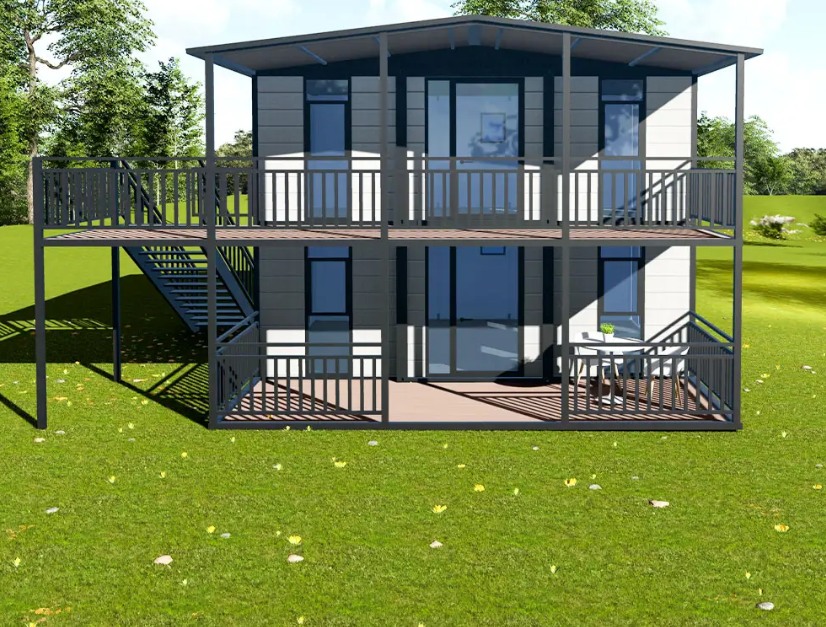
Sustainability Advantages of a Container House for Everyday Life
Lower carbon footprint through repurposed shipping containers
Repurposing decommissioned shipping containers into residential structures reduces construction-related emissions by up to 80% compared to conventional homes. This approach avoids the carbon-intensive manufacturing of new structural steel and diverts thousands of kilograms of industrial waste from landfills. Each upcycled container saves approximately 3,500 kg of CO₂ emissions—equivalent to those generated in producing comparable building materials. Their inherent structural strength also minimizes the need for supplementary framing or reinforcement, further shrinking the environmental footprint. By transforming global shipping byproducts into habitable spaces, container houses embody circular economy principles in daily living.
Seamless integration of solar energy, rainwater systems, and green roofs into daily routines
The modular geometry and standardized dimensions of shipping containers simplify the integration of sustainable infrastructure—making eco-technologies intuitive, reliable, and operationally seamless. Rooftop solar installations deploy up to 40% faster than on traditional roofs thanks to the container’s uniform corrugated surface and built-in mounting points. Rainwater harvesting channels can be embedded directly into the steel framework during fabrication, feeding filtration systems for landscape irrigation and non-potable household uses. Green roofs thrive on the reinforced steel substrate, delivering 15–25% annual HVAC energy reduction through natural insulation while mitigating stormwater runoff. Critically, these systems operate synergistically: solar power runs rainwater pumps, while vegetative cooling boosts panel efficiency—creating self-reinforcing sustainability loops woven into everyday life.
Cost-Effectiveness of a Container House Over Time
Faster, more affordable construction and simplified permitting for quicker daily occupancy
Container houses significantly compress timelines and budgets through factory-built precision and streamlined regulatory pathways. Most units are fully assembled off-site and installed on foundations in just 2–4 weeks—far quicker than the 6–18 months typical for site-built homes. Material costs average $18–$32 per square foot (versus $50–$150 for conventional builds), and labor accounts for only 15–25% of total project expenses—well below the 35–50% common in traditional construction. Because many jurisdictions classify container homes as modular units, permitting is often expedited, accelerating occupancy and reducing financing and carrying costs. This efficiency lowers entry barriers and enables faster transition into functional, daily living.
Long-term savings on utilities and maintenance in routine living
Ongoing affordability is a defining advantage: industry data shows container homes incur 22% lower annual maintenance costs than wood-frame equivalents—translating to roughly $18,000 saved per 100 m² over 15 years. Enhanced thermal performance from modern insulation systems cuts utility bills by up to 30%, while corrosion-resistant, non-combustible steel frames drastically reduce repair frequency and scope. Over a decade, average maintenance expenditure sits at $2,400—less than one-third the $7,100 typical for conventional homes. These durable, low-intervention characteristics ensure sustained economic resilience across decades of everyday use.
Adaptability and Flexibility of a Container House to Evolving Lifestyles
Modular scalability for remote work, growing families, or multi-generational living
Container houses evolve with life—not against it. Their standardized, load-bearing steel frames support rapid, code-compliant expansions without demolition or major site disruption. Remote workers gain dedicated offices in days, not months: prefabricated modules arrive with pre-wired electrical, data, and HVAC connections ready for plug-and-play integration. Families scale horizontally or vertically—adding bedrooms, playrooms, or guest suites in under two weeks—avoiding the 6–8 month timelines of traditional additions. Multi-generational needs are met with purpose-built accessible units featuring private entrances, step-free access, and tailored amenities—maintaining intergenerational connection without compromising autonomy. Industry benchmarks confirm modular expansions cost 30–40% less per square foot than custom-built additions, thanks to standardized components, reduced waste, and predictable labor requirements. Structural integrity remains uncompromised at every stage, making container homes a responsive, long-term answer to life’s inevitable shifts.
Durability and Safety Benefits of a Container House in Daily Use
Built from heavy-duty, marine-grade steel originally engineered to survive transoceanic voyages, a container house delivers exceptional resilience in everyday conditions. Its robust frame withstands extreme weather—including hurricane-force winds and heavy snow loads—making it especially suited for climate-vulnerable regions. Corrosion-resistant coatings and airtight construction inherently deter pests, moisture intrusion, and mold—common sources of indoor air quality issues and structural decay in conventional homes. From a safety perspective, steel offers superior fire resistance compared to wood framing, and modular designs allow precise reinforcement of load-bearing zones to meet or exceed international building codes. With routine upkeep—such as periodic sealant inspection and insulation integrity checks—a well-engineered container home provides secure, code-compliant occupancy for 50+ years.
FAQ
What is the carbon footprint reduction when using shipping containers for homes?
Repurposing shipping containers can reduce construction emissions by up to 80% and save approximately 3,500 kg of CO₂ emissions per container.
How does a container house integrate sustainable technologies?
Container homes easily incorporate solar panels, rainwater harvesting systems, and green roofs, enhancing energy efficiency and sustainability through seamless synergy.
How cost-effective are container houses compared to conventional homes?
Container houses typically cost less to build and maintain, with material costs averaging $18–$32 per square foot and 22% lower annual maintenance expenses.
Can a container house be expanded easily?
Yes, container houses offer modular scalability, allowing for quick, cost-effective expansions that adapt to changing lifestyle needs without major disruptions.
How durable are container houses in extreme weather conditions?
Built from marine-grade steel, container houses have exceptional resilience, withstanding extreme weather like hurricane-force winds and heavy snow loads.
Table of Contents
- Sustainability Advantages of a Container House for Everyday Life
- Cost-Effectiveness of a Container House Over Time
- Adaptability and Flexibility of a Container House to Evolving Lifestyles
- Durability and Safety Benefits of a Container House in Daily Use
-
FAQ
- What is the carbon footprint reduction when using shipping containers for homes?
- How does a container house integrate sustainable technologies?
- How cost-effective are container houses compared to conventional homes?
- Can a container house be expanded easily?
- How durable are container houses in extreme weather conditions?