
 EN
EN
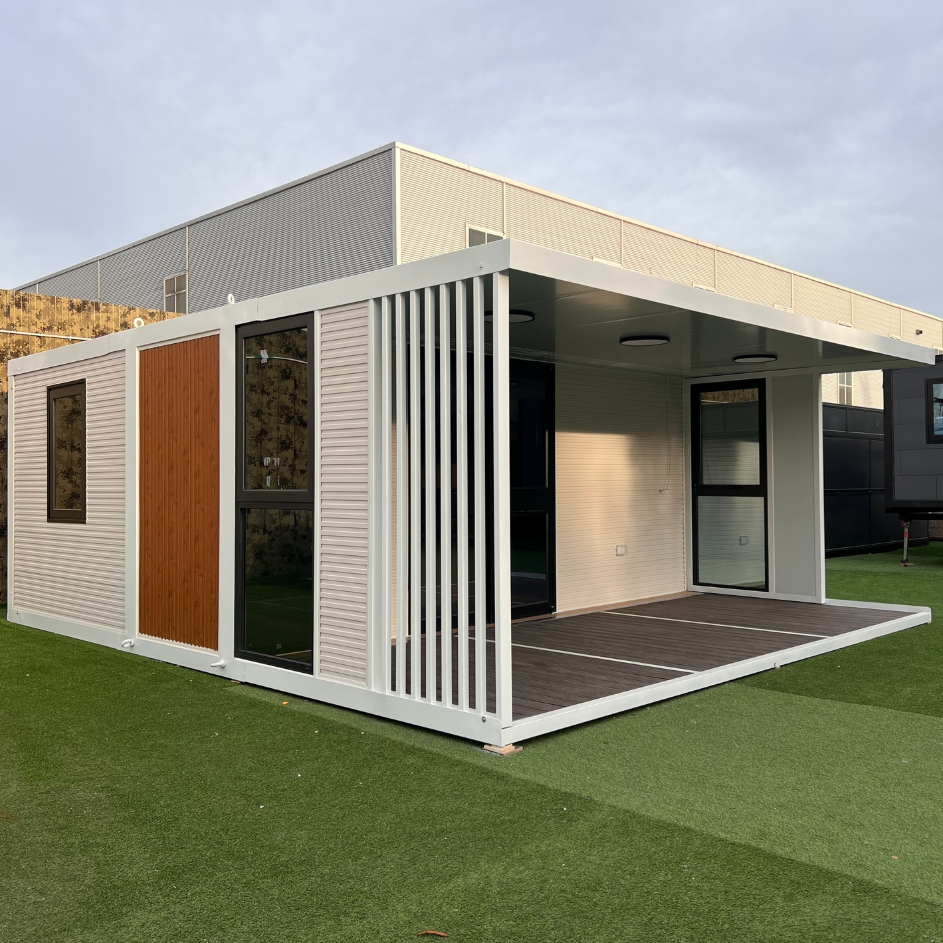
How Modular Houses Reduce Construction Time by 40–60%
Construction Time for Modular Homes
A modular house utilizes parallel construction, where various trades overlap, and reduces build time by several months. While crews are onsite pouring concrete and doing site-based utilities, workers at the factory are assembling wall panels, doing interior site work and climate control, and adding electrical and plumbing. In traditional construction, trades must sequentially wait on each other. The National Institute of Building Sciences proves modular construction can decrease build time by 40–60%, with some modular structures finishing 50% faster than traditional structures. For example, two thirds of construction industry professionals say utilizing modular construction methods sped up their building schedules, while 35% say their work resulted in timelines shortened by four weeks or more.
Proof of Concept: 12-Week Construction of 4 Bedroom Modular House
A modular construction project in Texas demonstrated proof of concept by finishing the construction of a fully turn-key, four-bedroom house in just 12 weeks. Offsite construction completed 85% of the work, and only onsite connection of the foundation, utility work, and finishing remained. On and offsite weather delays, which affect almost 30% of traditional construction, had no impact. The project was modular construction at its best. Total construction time was just 2.1 hours per square foot of completed modular house, in contrast to the standard 6.2 hours per square foot for traditional construction. Modular construction methods can achieve predictably timed projects with high quality as demonstrated by the Texas modular construction project.
Precision and Predictability: Controlled Factory Manufacturing for Modular House
Decreased Field Disruption from Off-Site Completion
Doing 80-90% of construction work inside of a controlled factory setting allows a modular house to greatly decrease the unpredictability associated with typical on-site construction. Weather changes affect modular house construction less and interior components can even be put together in the controlled environment of a factory. Instead of on-site construction, the modular house has electrical and plumbing work done inside a factory. Since nearly all of the work is completed, the time spent on-site to do the remaining work is greatly reduced. When construction is done in a factory, the only work left to do on-site is to connect the house to utilities and do the finishing work to connect the modules to the foundation.
Reduction in Waste and Rework Due to CNC Fabrication and QA
The use of precision manufacturing is now a fundamental part of modular home construction. Components for the modular house are fabricated using CNC (Computer Numerical Control) tools to ensure the pieces are cut and made to the exact size. Doing construction work in a controlled environment setting prevents the growth of mold and protects the materials from damage along with other benefits. The combination of all of these factors adds to creating modular house construction that requires less repairs throughout its life.
Resilient Execution: How Modular Housing Overcomes Weather and Labor Delays
Traditional construction delays caused by inclement weather are unavoidable and frustrating. A rainy season may postpone foundation work, freezing temperatures can cause delays in curing concrete, and extreme heat can result in issues with material adhesion. Delays can add 20-30% to estimated project timelines. A solution in the form of a modular house can shift 80%-90% of a project’s construction off site and indoors. A factory can build a house regardless of site conditions, creating significant progress during a rainy season. According to the U.S. Department of Commerce's Construction Industry Forecast, factory construction can eliminate about 23% of construction delays.
Labor delays are completely eliminated. A modular house can be assembled in 11 worker-days. In comparison, a traditional house can take 48 worker-days. Modular factories have teams that consistently repeat the same assembly tasks while also overcoming the shortage of skilled trades and combine them with the use of optimal techniques. Modular construction can provide a house with quality and durability and can allow families to finalize their move dates with a construction schedule and timeframe that is guaranteed.
Lifecycle Advantages: Lower Total Cost of Ownership and Scalable Replication
For the builder and owner, a modular house truly begins to pay off in the lifecycle of the building. Shorter build schedules result in less time spent on construction financing and insurance, while the factory's precision leaves the modular house with minimal upkeep. A 50% faster house can result in the owner occupying less temporary housing and having to deal with less administrative overhead. The savings last the life of the building and the owner can relax knowing that the budget will not be impacted by any unplanned expenses.
Lower Cost of Financing, Insurance, and Overhead from Reduced Construction Lengths
Shorter construction time means fewer daily interest charges from construction loans and lower duration-based construction insurance costs. Overhead costs for construction site security and temporary utilities also reduce. Savings improve return on investment and increase available capital for other priorities.
Possibility of Design Reuse Leads to Efficient Operations Across Many Sites
Standardized modular housing designs can be copied across many projects with little redesign, which decreases engineering and permitting costs. Once a design has been approved for one construction site (e.g. approved under the International Building Code as a prefabricated structure), it can be quickly and easily modified and expanded to other sites, which allows for an increased number of structures in a portfolio with little sacrifice of construction quality and compliance to building codes.
Frequently Asked Questions
What is a modular house?
A modular house is a prefabricated building which is assembled off-site (in a factory) and then delivered to the (final) construction site. This method reduces construction time and increases construction quality.
How much time does modular construction save compared to traditional construction?
Construction time can be reduced by approximately 40-60% (i.e. 50% faster than traditional construction in some cases).
What portion of construction is modular construction completed off-site?
Generally, 80-90% of modular construction is completed off-site in a factory, leading to less construction time needed at the construction site.
How does modular construction reduce costs?
Due to its reduced duration, modular construction requires less financing and insurance. Overhead costs are lower (for construction site security and temporary utilities) and, due to the precision of the method and reduced timed construction, long term maintenance costs are lower.
Are modular housing designs standard and reusable for other projects?
Yes, because of their standard nature, modular designs can be used for multiple projects, leading to lower engineering and permitting costs, as well as reduction in the construction time of the project.